

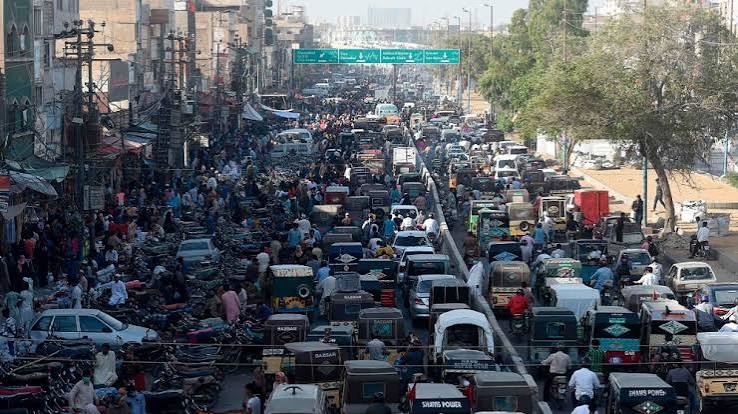
Even though Karachi is Pakistan’s city, its most crucial port and the central hub of the national economy, it has been dealing with problems for years that are getting more complicated over time. Some of the issues that have raised concerns about the city’s administrative performance are rapid population growth (more people using city services), traffic jams, not enough water and local government institutions that are not very capable.
Urban planning experts say that Karachi’s problems are not just because of a lack of resources but because of how administrative powers are divided, how well institutions work together and how well long-term policies are made.


Karachi’s population has grown a lot over the 20 years. The city’s population is now millions. Its infrastructure has not grown at the same rate. As a result its transport, health, education, housing and civic services systems are always under pressure.
Experts say that in cities around the world local governments are the main part of urban administration. However, in Karachi, local government institutions often say they do not have powers and financial resources. This is why there are often delays in implementing projects and conflicts between different institutions.
Economic analysts say that Karachi is the backbone of Pakistan’s economy. A big part of the country’s exports, industrial production, banking, trade and service sector are linked to this city. However, the state of amenities often does not match its economic importance.
In recent years there have been more discussions about administrative reforms, decentralization and new models of urban governance. Some people think that local bodies should have autonomy while others think a new administrative structure is needed for urban administration.
Urban policy experts say that the real question is not which political model to use but how to make public services better more transparent and more accountable. They say that examples of cities show that strong local governments and clear powers are the basis of better urban administration.
The business community has also said that weak infrastructure and urban problems affect the investment climate. Experts think that if Karachi wants to be a competitive megacity it will need fundamental reforms in urban governance.
Observers say that Karachis problem is not a city problem but also related to national economic development. This is why the debate, on governance, devolution and local government reforms may become more important in Pakistans policymaking in the future.
The growing needs of the city require solutions that go beyond political debates to provide better services to citizens, effective representation and sustainable development. This challenge will determine Karachis direction in the coming years.