


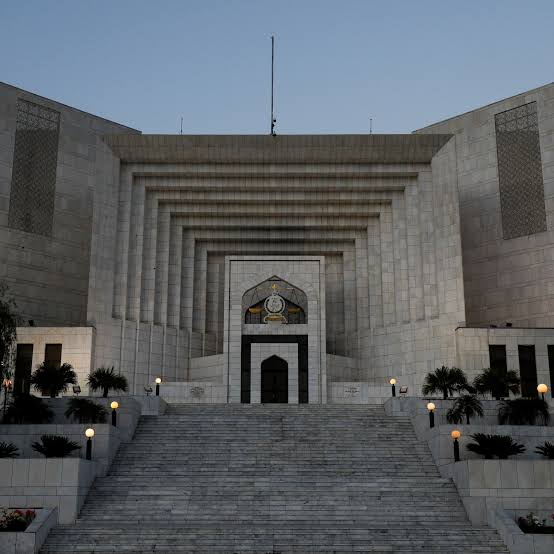
The Supreme Court of Pakistan has delivered a landmark and far-reaching judgement on women’s inheritance rights, making it clear that no woman can be deprived of her legal and Sharia right to inheritance on the basis of family pressure, fraudulent transfers, verbal gifts or traditional customs. The apex court, while delivering its verdict on a 71-year-old family property dispute, ruled that inheritance passes to all legal heirs with the death of the deceased, and this right cannot be terminated later by any illegal means.
Justice Shahid Bilal Hassan, the head of the two-member bench, said in his detailed judgement that Islamic inheritance law provides a clear system for fair distribution of wealth; therefore, women’s share cannot be subject to the will of the family, social customs or the wishes of male relatives. He said that it is the responsibility of the courts and government institutions to protect the rights of women and not to provide legal protection to such measures that result in their deprivation of their rightful share.


The case concerned the property of a man named Roshan who died in 1955. After his death, a hereditary transfer was registered in the names of all the legal heirs; however, another transfer was registered on the same day, claiming that the deceased’s widow and daughters had verbally gifted their share to their two sons.
The female heirs maintained that they had never made such a gift, and the records were altered to deprive them of their legal rights. Later, on the basis of the same disputed transfer, the property was transferred to future generations through various exchanges and gifts, after which the dispute became more complicated.
The trial court, the appellate court and the Lahore High Court had rejected the women’s petition; however, the Supreme Court, while setting aside all the previous decisions, declared the disputed transfer illegal and void. The court directed the concerned revenue authorities to correct the land records and ensure the distribution of the property among all the legal heirs in accordance with Islamic law.
The Supreme Court in its judgement also reiterated the important legal principle that when an alleged gift or transfer is challenged, the onus of proving its legality lies with the persons benefiting from it. A mere entry in the revenue records does not automatically prove a matter to be correct but requires evidence and legal scrutiny.
The court also expressed concern that even today, many women in Pakistan are deprived of their Sharia and legal rights to inheritance due to fake gift names, forged documents, forced withdrawal, family pressure and lengthy legal proceedings. The judgement said that this is not just a legal issue but also a social attitude that needs to be changed.
Justice Shahid Bilal Hassan remarked that true justice is possible only when society is ready to grant women the rights that Islam and the laws of the country have granted them. If family, community or social traditions deprive women of their rights, then such traditions have no status before the law and the constitution.
The court further stated that the responsibility for protecting women’s inheritance rights lies not only with the government or the courts but also with families, religious leaders, lawyers, revenue officials, local leadership and civil society. The judgement said that a society that talks about justice but allows women to be deprived of their legitimate inheritance rights cannot reflect the true spirit of constitutional and Islamic principles.
According to legal experts, this decision will prove to be an important precedent for future inheritance-related cases and will help further strengthen the legal protection of women. It is expected that after this decision, subordinate courts and revenue officials will examine the evidence in such cases more carefully so that the rights of any heir, especially women, are not affected.