
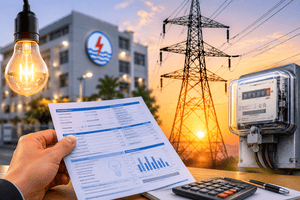
The National Electric Power Regulatory Authority (NEPRA) has taken a decision on the application submitted by the National Grid Company regarding the recovery of various system costs from the electricity consumers in the country in the last three financial years, which could lead to a transfer of an additional financial burden of Rs 200 billion to consumers in the country.
From available information, it appears that NEPRA had been approached by the National Grid Company for recovery of various system costs. After hearing the application, a detailed review of the relevant records and taking into account the positions of all the concerned parties, the regulator issued a written decision in which the company has been allowed to recover the costs under specific conditions.
According to sources, the recovery of the approved amount is likely to start from August 1, 2026. This recovery will be undertaken by the distribution companies (DISCOs) which distribute electricity throughout the country, such as Lahore Electric Supply Company (LESCO), Faisalabad, Gujranwala, Multan, Islamabad, Peshawar, Hyderabad, Sukkur, Quetta and other state-owned distribution companies.
Following this decision, distribution companies will have the right to ask for extra charges from consumers, called a ‘tariff’, and this can lead to an increase in the price of electricity per unit, according to the sources. The actual percentage increase per unit, however, and how it will affect different groups of consumers as well as what will happen in recovery, are likely to be officially announced later.
For the present, the additional burden has not been defined as to which type of consumers (domestic, commercial, industrial, agricultural, etc.) should bear it. But energy experts involved in this issue say it’s only after the end of the tariff schedule is announced that the real financial burden to each consumer category can be determined.
After the decision of NEPRA, there is concern among electricity consumers, as domestic and business consumers are already paying heavy bills due to electricity tariffs, various taxes, surcharges, quarterly tariff adjustments and fuel price adjustments. If the burden is passed on even further in such a case, the monthly expenses of consumers may spike up a lot.
If the whole of the Rs 200 billion is recovered directly from the consumers of electricity, it will not only impact the household consumers but also the commercial and industrial consumers, according to energy experts. The rise of electricity cost may raise the cost of production in industries and may also impact business activity, exports and overall competitiveness of the economy, they said.
The effect of the rise in energy prices could also be felt on the prices of basic commodities, economists said, as the rise in energy costs, particularly for industries and commercial establishments, is often reflected in the prices of products and services. Here, the prospect of even further inflationary pressure can be ignored.
But some energy experts believe that prompt recovery of the real costs involved in the power system could contribute to the financial sustainability of the power sector. According to them, if the dues are not paid on time, there is a risk of a further increase in circular debt, which will have an impact on the entire power system.
Sources said that more notifications about the implementation of NEPRA’s decision, the recovery procedure, the application period, the per-unit recovery cost and information about the tariffs applicable to different consumers will follow later by the relevant authorities.
It will only be known after the final notification is issued how much electricity bills of all consumers will rise and for how long this recovery will take place, experts say. In the meantime, the consumers and the business community await further details to be disclosed by NEPRA and other concerned institutions.
I can also make a separate news item unique and explanatory in the style of Pakistan Today, if one is desired, to ensure that the news is not duplicated on both websites.
We welcome your contributions to The Pakistan Today. Submit your blogs, articles, press releases, news story pitches and news features to our editorial team.
Please send your submissions to our News Desk or Editorial team. We look forward to hearing from writers, journalists and contributors.