

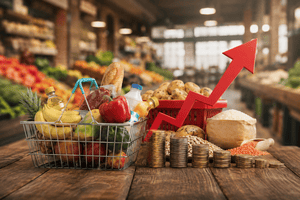
The country has once again recorded an increase in inflationary pressures, where the prices of several basic commodities, fuel and vegetables have increased, according to the latest weekly data. Although the prices of some food items also decreased, the overall trend still indicates an increase in inflation.
According to the weekly report released by the Pakistan Bureau of Statistics (PBS), inflation based on the Sensitive Price Indicator (SPI) increased by 0.91 percent compared to the previous week, while the overall rate increased to 9.66 percent on an annual basis.
A review of 51 basic necessities included in the report revealed that during the past week, the prices of 22 items increased, 8 items became cheaper, while the prices of 21 items did not change significantly. This shows that the price increase is not limited to limited items but is spreading across various sectors.
According to the report, a significant increase was seen in fuel prices. The price of high-speed diesel was recorded to increase by 15.87 percent, while the price of petrol was recorded to increase by 5.23 percent. According to experts, the increase in energy prices has a direct impact on transportation, agricultural activities and industrial costs, which may result in other essential commodities becoming more expensive.
In the food sector, tomatoes remained among the most expensive items, the price of which increased by 39.92 percent. Similarly, eggs became more expensive by 7.31 percent, potatoes by 3.70 percent and LPG by 0.91 percent. Apart from this, the prices of garlic, beef and many other essential commodities also increased, indicating a further increase in household expenditure.
On the other hand, there was a decline in the prices of some commodities. Chicken became cheaper by 4.66 percent and bananas by 1.72 percent, while the prices of sugar, rice and various types of pulses also decreased, providing limited relief to consumers.
Economic analysts say that the recent report indicates that a complete reduction in inflationary pressures has not yet emerged. According to them, fluctuations in the global energy market, local supply chains, weather conditions and import costs may also affect the price trend in the coming weeks.
According to experts, it will be necessary for the government to ensure the availability of essential commodities, prevent hoarding and effectively monitor prices so that inflationary pressures on consumers can be reduced. They say that if stability in the food and energy sectors remains, there could be some improvement in the pace of inflation in the coming weeks, but current figures reflect continued pressure on public spending.
We welcome your contributions to The Pakistan Today. Submit your blogs, articles, press releases, news story pitches and news features to our editorial team.
Please send your submissions to our News Desk or Editorial team. We look forward to hearing from writers, journalists and contributors.