

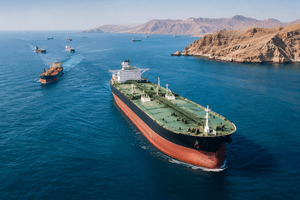
The future situation of the Strait of Hormuz has become a key issue in the ongoing tension between Iran and the US, while Tehran has made it clear that the decision to fully restore the passage to normal maritime traffic will be conditional on US actions.
According to Mohammad Baqer Zolqadr, Secretary of the Iranian Supreme National Security Council, the Strait of Hormuz will not be fully reopened unless the US changes its behavior.
The stance put forward by Iranian officials has made several demands on the US. Tehran says that Washington must refrain from threatening statements and actions against Iran and ensure respect for the Iranian nation.
Iran has also made the end of the ongoing military conflicts in the region an important condition. According to the Iranian demand, there should be a permanent end to the ongoing hostilities and aggression in areas including Lebanon, Palestine, Yemen and Iraq, which Tehran considers to be its allies.
Tehran has also objected to US military activities around the Strait of Hormuz. According to the Iranian position, the US should end the alleged naval blockade around the strait and withdraw its naval and air forces from the region.
Iran has also included financial compensation for losses incurred during the war in the negotiation terms. Tehran demands that Iran be fully compensated for the losses suffered.
In addition, Iran has also demanded the lifting of US sanctions and the return of frozen Iranian assets abroad. According to the Iranian position, these assets should be released without any additional conditions.
The importance of the Strait of Hormuz is not limited to regional politics. It is a vital maritime link between the Persian Gulf and global energy markets, and a prolonged blockage here could increase pressure on global oil and gas supplies, shipping costs and energy prices.
After Iran came up with new conditions, the issue of restoring the Strait of Hormuz has become more intertwined with the Iran-US talks. Efforts are underway to reach a possible agreement through diplomatic channels brokered by Oman, but the gap between Tehran’s demands and Washington’s likely response could pose a significant challenge to a final agreement.
The Strait of Hormuz, as well as sanctions, the US military presence and war reparations, are likely to be key topics in the upcoming talks. Any agreement would have implications not only for Iran and the US, but could also affect Gulf security and global energy trade.
We welcome your contributions to The Pakistan Today. Submit your blogs, articles, press releases, news story pitches and news features to our editorial team.
Please send your submissions to our News Desk or Editorial team. We look forward to hearing from writers, journalists and contributors.