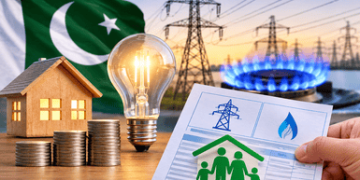

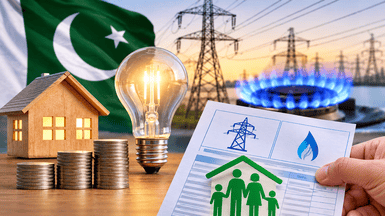
The federal government is preparing to introduce a new targeted subsidy system for electricity and gas consumers from 2027, aiming to direct financial assistance towards low-income households instead of providing broad-based relief.
The proposed mechanism will use a new Economic and Social Registry to identify deserving households and assess their eligibility for government subsidies.
The Power Division and Ministry of Petroleum have jointly developed the framework. The system is expected to use socioeconomic information and records of the Benazir Income Support Programme (BISP) to identify eligible consumers.
According to the proposed implementation schedule, the new electricity subsidy mechanism is expected to take effect from January 1, 2027, while the gas subsidy system is planned for February 2027.
A steering committee headed by Deputy Prime Minister Ishaq Dar will make the final decision on implementation. Officials will also conduct a trial run before introducing the system nationwide to assess its performance and identify possible administrative problems.
However, the government is seeking to maintain the existing subsidy arrangements until June 30, 2027, to avoid an immediate withdrawal of relief for consumers.
On the directions of Prime Minister Shehbaz Sharif, the government has also pursued an extension of electricity subsidies for households consuming up to 200 units per month.
Recent reports indicate that Pakistan and the International Monetary Fund (IMF) have reached an understanding to extend this relief for another six months, potentially keeping it in place until June 30, 2027. Under the reported arrangement, the benefit would gradually become restricted to eligible BISP-registered households.
The IMF’s broader reform programme also supports replacing the existing electricity tariff differential and cross-subsidy arrangements with a targeted assistance framework for low-income consumers through BISP. The programme sets the end of January 2027 as the deadline for this electricity subsidy reform.
The proposed changes are part of wider efforts to improve the distribution of public funds and reduce financial pressure on the energy sector.
However, the transition will require accurate household records, transparent eligibility criteria and an effective complaint mechanism to ensure that deserving families are not excluded from assistance.
The final implementation arrangements, including the future of existing consumer relief, will depend on government decisions and the agreed terms with the IMF.