

In a major step towards national security, digital sovereignty and promotion of modern technology, the federal government has approved 24 development projects worth a total of Rs 465.76 billion. These projects include a secure mobile communication system for government institutions, Pakistan’s new communication satellite Paksat-2, a national programme on artificial intelligence, a modern data centre, railways, highways and power projects.
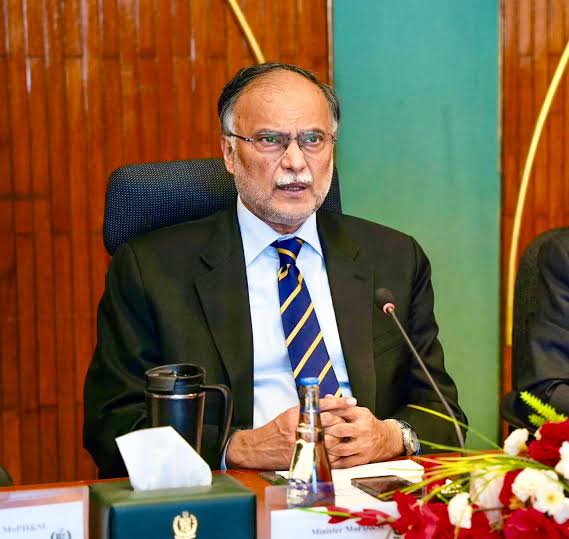
These decisions were taken at a meeting of the Central Development Working Party (CDWP) chaired by Federal Minister for Planning Ahsan Iqbal, where 15 projects were approved while nine major projects were sent to the Economic Coordination Committee (ECNIC) for final approval.


The meeting specifically considered the proposal to establish a secure mobile communication ecosystem for government institutions, which aims to provide at least ten thousand government officials with a communication platform that is separate from the public internet and protects sensitive government information from cyber attacks or data leaks.
The initial cost of the project has been pegged at around Rs 709 million. Although the Planning Commission has indicated that further improvements are needed on its technical aspects, the National Telecommunication Corporation (NTC) has been directed to develop a more secure and modern system after consulting all relevant agencies.
According to sources, in view of the recent regional tensions and modern cyber threats, the government is trying to make the government communication system completely secure. The proposed system will include facilities like secure video and audio calls, file sharing, encrypted messaging, a central contact list, dedicated servers, secure mobile phones and a remote “kill switch” if needed.
The meeting also gave in-principle approval to two other important projects in the information technology sector. These include the Emerging Technologies Data Center worth Rs 7.93 billion, where a secure computing infrastructure will be provided at the national level for artificial intelligence, cloud computing, high-performance computing and government digital services. According to officials, this move will reduce dependence on external cloud services and strengthen national digital sovereignty.
Similarly, the National Artificial Intelligence Ecosystem Development Program worth Rs 13 billion was also approved. Under this project, a comprehensive review of Pakistan’s current capacity, investment, legal framework, research potential and future needs in the field of artificial intelligence will be conducted to formulate an effective national strategy.
The meeting also recommended the PakSat-2 project at a cost of Rs 37.19 billion. This satellite will replace the existing PakSat-IR, whose operational period is completing this year. Through this project, Pakistan will not only be able to maintain its communication capacity but also secure its international satellite orbital slot.
In addition, several major projects related to the railways, national highways and energy sectors were also approved. These include the ML-3 railway upgradation, Lala Musa Bypass, Mashkhel-Chhidgi Road, Rathua Haryam Bridge, the establishment of a Special Protection Unit in Islamabad and projects to improve the electricity transmission system in Azad Kashmir.
Government officials say that these projects are not limited to infrastructure development alone but also aim to make Pakistan stronger and more autonomous at the regional level in the fields of digital economy, modern technology, cybersecurity and artificial intelligence. According to experts, if these projects are implemented in a timely manner, they can play an important role in national security, government digital systems, economic activities and future technology-based development.