

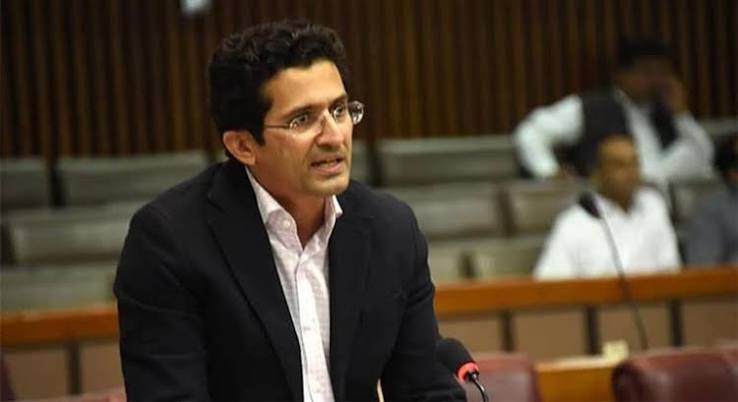
Federal Minister for Petroleum Ali Pervaiz Malik has defended the government’s decision to maintain the prices of petrol and high-speed diesel until further orders, saying that the government is neither giving undue benefit to any specific sector nor is it putting additional burden on any other segment. He said that the government is committed to providing possible relief to consumers, keeping in mind international obligations and economic realities.
In his statement released on social media platform X, the federal minister also shared a comparative review of crude oil prices in the global market last week. According to him, the price of petrol in the global market during June 22-26 ranged from $90.36 to $98.35 per barrel, while high-speed diesel ranged from $104.79 to $109.09 per barrel.


Ali Pervaiz Malik said that the government does not determine prices based only on the trend of a day in the global market, but it takes into account several factors, including import costs, taxes, petroleum levy, exchange rate, available reserves and international agreements. According to him, this is the reason why sometimes it is not possible to immediately transfer complete relief to the consumers despite the reduction in prices in the global market.
Referring to the performance of Prime Minister Shehbaz Sharif’s government, he said that the current government has so far reduced the price of petrol by a total of Rs 155 per litre while the price of high-speed diesel by Rs 200 per litre. He said that the government tries to provide relief to the people whenever the situation permits.
This statement by the Petroleum Minister has come at a time when the government’s recent decision has been criticised by opposition parties, political leaders and some economic experts. Critics argue that global crude oil prices have come close to pre-Iran-Israel tension levels, so the government should have provided more relief to the public.
Former Sindh Governor Muhammad Zubair questioned why petrol was still being sold at around Rs 300 per litre in Pakistan when global prices had fallen significantly. Pakistan Tehreek-e-Insaf leader Haleem Adil Sheikh also accused the government of not passing on the benefits of the global market decline to the public.
On the other hand, the Jamiat Ulema-e-Islam (F) also termed the decision to maintain prices as an increase in public hardship. Party spokesperson Aslam Ghauri said that not providing relief to the public despite crude oil being cheaper internationally shows the government’s indifference. Renowned journalist Zahid Gashkori also said in his response that the decision benefited oil companies and big business circles while harming the common consumer.
It should be noted that the government had announced on Friday night to maintain the price of petrol at Rs 299.50 per litre and the price of high-speed diesel at Rs 311.47 per litre. Earlier, following the decline in crude oil prices in the global market last week, the government had reduced the price of petrol by Rs 74 and the price of diesel by Rs 67 per litre.
According to experts, the change in the price of petrol has a direct impact on private transport, motorcyclists and the middle class, while diesel prices affect the costs of freight vehicles, the agricultural sector, power generation and transportation of essential goods. Therefore, every government decision regarding the prices of petroleum products is important not only for the public but also for business activities and the overall economy.