

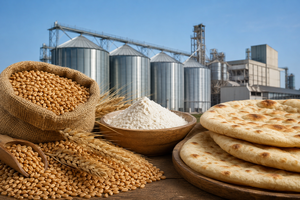
The Punjab government has started supplying wheat to flour mills from government reserves to improve the availability of wheat and flour in the province and maintain price stability. Officials say that the aim of this move is not only to ensure a continuous supply of flour but also to protect the common consumers, especially the low-income group, from possible price pressure.
According to DG Food Punjab Amjad Hafeez, the government has released government wheat to flour mills at the rate of Rs 3,800 per maund. He said that under the government policy, the price of wheat will also be reduced in phases with the passage of time so that its benefits can reach the consumers directly.
He said that the government’s priority is to ensure that wheat and flour are within the reach of the common citizens. Under this objective, one million metric tonnes of wheat reserves of PASSCO are being transferred to the Punjab government so that continuity of supply is maintained in the province and a balance between supply and demand can be created.
Continuous monitoring in the market
Amjad Hafeez said that the food department is continuously monitoring the prices of wheat and flour in the market. According to him, if any elements try to hoard or create artificial shortages, strict action will be taken against them as per the law.
He said that the release of government reserves is part of a systematic strategy aimed at keeping the market stable in the future and preventing unnecessary fluctuations in prices.
Bakers’ demands spark debate
The government’s move has come at a time when the Muttahida Nanbai Association had warned of closing its ovens in view of the current cost and demanded that the official price of plain bread be fixed at Rs 25.
Association President Aftab Aslam Gul said that selling bread at the current rate was not economically feasible. According to him, the increase in the price of bread has become inevitable due to the increase in flour, fuel and other production costs.
He also said that if the government ends gas load shedding, further reduces the price of flour and makes standard-weight flour bags available at reasonable rates, bakers can also sell bread at a relatively low price.
Potential impact on prices
According to economic observers, the supply of government wheat can improve the availability of raw materials to flour mills, which is likely to reduce pressure on flour prices. However, the final price of bread depends not only on wheat but also on gas, electricity, labour, transport and other production costs.
Experts say that if the government supply chain continues uninterrupted and hoarding in the market is effectively controlled, flour prices can remain stable, while negotiations between bakers and the government on price determination can also play an important role.
We welcome your contributions to The Pakistan Today. Submit your blogs, articles, press releases, news story pitches and news features to our editorial team.
Please send your submissions to our News Desk or Editorial team. We look forward to hearing from writers, journalists and contributors.