
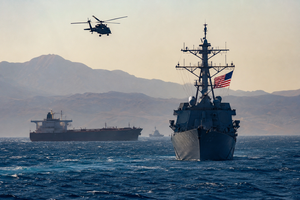
The tension in the Middle East is now in a new phase as the United States president Donald Trump has announced to re-impose a naval blockade on Iran and will keep a close eye on Iranian ports and will strictly control sea traffic related to Iranian ports. The announcement has not only helped to exacerbate the existing tensions between Washington and Tehran but also introduced energy market and international maritime trade concerns.
The US president’s declaration follows recent military operations and counterattacks by the US and Iran in the region, which have added to the uncertainty in the area. The new plan, according to the US officials, is to limit Iranian navy access to other countries’ ports, while US officials say that other countries’ international shipping will continue as far as possible.
The US Central Command (CENTCOM) will be in charge of the operation and tracking of ships entering or leaving Iranian ports, official statements said. Some critics, however, have said that such operations may further aggravate the situation in the region, as the US administration has claimed it’s taken this move for regional stability and national security.
Iranian officials have also denied the U.S. announcement, saying it’s a violation of international law. Tehran says Iran will be taking “all necessary steps” to defend the country’s sovereignty and maritime rights. Both sides have made significant declarations, but so far there’s been no new political progress.
The key takeaway from this is the sensitivity of the Strait of Hormuz, which is vital to the passage of much of the world’s crude oil, according to analysts. The military tension and naval blockade could impact not only the global supply of oil but also international shipping, insurance costs, and energy prices.
Should tensions continue, markets could experience crude oil price volatility, and countries that are importing fuel may suffer further economic strain, economists say. Bread prices have also risen in the Middle East due to the impact of the region, which is also being closely monitored by investors.
According to diplomatic circles, the importance of negotiations to reduce tensions in the current situation has increased more than ever. If neither side is seen to be holding back, further security and global trade in the region could be impacted, experts said. Instead, any diplomatic progress will lead to an easing of the situation and less concern in global markets.