

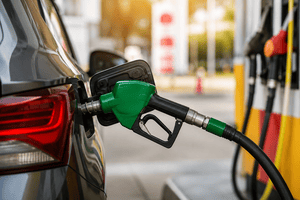
After another change in the prices of petroleum products in Pakistan, new prices have been implemented, which will benefit millions of consumers by partially reducing the cost of fuel. The government’s decision aims to keep the local market in line with the continuous changes in global crude oil prices.
According to a notification issued by the Petroleum Division, the price of petrol has been fixed at Rs 334.18 per litre, while high-speed diesel has been fixed at Rs 386.83 per litre. The implementation of the new prices has started from July 28.
Although the recent decision has provided some relief to consumers, the share of government taxes and duties in the price of fuel remains significant. According to official data, Rs 110 per litre is being collected on petrol while Rs 96 per litre is being collected on high-speed diesel as various taxes and levies.
In recent months, global crude oil prices have been volatile due to the uncertainty in the Middle East. At the same time, petrol and diesel prices in Pakistan also reached record levels, but after the global market stabilised, local prices have also shown a downward trend.
The government has also changed the method of determining fuel prices, keeping in mind the changing global situation. Now, the Oil and Gas Regulatory Authority (OGRA) announces new prices on a daily basis after reviewing international oil prices, import costs, exchange rates and other economic factors.
While consumers are focused on the daily price changes, petroleum dealers have expressed reservations about the system. Dealers are of the opinion that daily price changes can complicate business planning and stock management, on which the organisation is consulting on the future course of action.
According to experts, the direct benefit of the reduction in petrol price goes to motorcyclists, private vehicle users, rickshaw drivers and small businesses, while the reduction in diesel price is expected to reduce the costs of freight transport, the agricultural sector, industry and power generation companies. If this trend continues, it may also have a positive impact on the cost of delivering essential goods.
Energy sector analysts say that in the coming days, the prices of petroleum products in Pakistan will depend on the global crude oil price, the geographical situation of the region, the value of the rupee and the government’s fiscal policy. Due to the new daily pricing system, changes in the global market will now be transmitted to local consumers faster than before.
We welcome your contributions to The Pakistan Today. Submit your blogs, articles, press releases, news story pitches and news features to our editorial team.
Please send your submissions to our News Desk or Editorial team. We look forward to hearing from writers, journalists and contributors.