


From the Waters of 1965 to the Maritime Realities of Today
Land can be mapped, boundaries can be marked and the air can be watched. The sea, however, has always been different. It is vast, restless and fiercely unpredictable. Those who work at sea do not try to tame it. They learn to read it, respect it and navigate its uncertainty.
Pakistan remembers 6 September as the day when its armed forces confronted an invading force and the nation rallied behind them. The 1965 war, amid escalating tensions over Kashmir and earlier clashes in the Rann of Kutch, soon spread across multiple fronts. The battles around Lahore and Sialkot, and the air war over Pakistan, became part of the national memory.
But the war had another theatre, one that could not be seen from the streets of Lahore or the fields of Sialkot.
It was the Arabian Sea.
In September 1965, Pakistan was still a young state. Its resources were limited, and its navy was considerably smaller than India’s. Yet its coastline could not be left exposed. The Pakistan Navy had to patrol its waters, protect the approaches to Karachi and ensure that the sea did not become another avenue through which the war could reach Pakistan.
Then there was PNS/M Ghazi.
A submarine could disappear beneath the water and, without firing a shot, introduce uncertainty into an adversary’s calculations. Ghazi was deployed towards India’s western coast during the war. Its presence formed an important part of Pakistan’s naval strategy, although historians have differed over the extent to which it constrained Indian naval operations.
On the evening of 7 September, another operation was taking shape.
Seven Pakistani warships were ordered to rendezvous west of Dwarka: the light cruiser PNS Babur, frigate PNS Badr, and destroyers PNS Khaibar, PNS Jahangir, PNS Alamgir, PNS Shah Jahan and PNS Tippu Sultan. The task group was commanded by Commodore S. M. Anwar.
As darkness settled over the Arabian Sea, the ships moved towards the Indian coast.
There was no battlefield crowded with tanks, nor formations of aircraft filling the sky. There was only the sea, the darkness and the measured movement of a naval task group approaching its objective.
Dwarka had been selected partly because of its coastal radar installation, which Pakistani planners regarded as an important element of India’s surveillance and air-warning network. The operation, associated with the codename Somnath, also sought to draw Indian naval units out, potentially exposing them to the threat posed by Ghazi.
In the early hours of 8 September, the Pakistani ships opened fire on Dwarka and subsequently withdrew. Pakistan’s official naval account has described the operation as successful and reported damage to shore installations, including the radar station and radio beacon. Indian accounts have disputed the extent of the physical damage and generally regarded its material impact as limited.
The significance of the operation in Pakistan’s naval history, however, extends beyond the question of how much damage was inflicted.
It demonstrated how a relatively smaller force could take the initiative through preparation, coordination and professional judgement. The seven ships entered waters off the Indian coast, carried out their mission and returned. The operation subsequently became one of the defining episodes in Pakistan’s naval history, while 8 September came to be observed as Navy Day.
Yet the real story of 1965 does not end with Dwarka.
In many ways, it begins there.
The decades that followed brought painful lessons and new challenges, from the experience of 1971 to changing power balances in the Indian Ocean, nuclearisation, terrorism, technological change and the growing importance of maritime trade.
The Navy increasingly had to think beyond coastline defence. Underwater warfare, maritime surveillance, naval aviation, protection of sea lines of communication and coastal security became increasingly important. Naval power was no longer only about what could be done during war. It was also about creating the conditions in which a country could remain secure during peace.
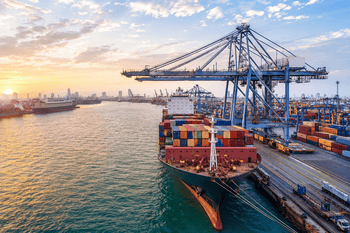
That transformation is particularly important for Pakistan because the country’s economy remains heavily dependent on the sea. Government sources have put the share of Pakistan’s trade moving through maritime routes at around 90 percent or more.
In March 2026, that dependence became particularly visible when the Pakistan Navy launched Operation Muhafiz-ul-Bahr in response to an evolving regional maritime security environment. The operation was designed to protect national shipping, critical sea lanes and the flow of energy supplies. Pakistan Navy ships also conducted escort operations in coordination with the Pakistan National Shipping Corporation to help ensure the safe passage of merchant vessels.
The contrast with 1965 is striking.
Then, the immediate question was how to prevent the sea from becoming a vulnerability. Today, the question is larger: how can the sea become an instrument of national prosperity?
Pakistan’s coastline gives it an important position on the Arabian Sea, connecting South Asia with the Middle East and the wider Indian Ocean. Karachi and Port Qasim are major gateways for the national economy, while Gwadar and the China-Pakistan Economic Corridor have added another dimension to Pakistan’s maritime ambitions.
But a port by itself does not create a maritime economy.
A genuinely maritime Pakistan would require secure shipping routes, efficient ports, a stronger national shipping sector, fisheries, coastal tourism, marine research, shipbuilding and repair, maritime services and sustainable management of marine resources. The Blue Economy therefore expands the meaning of maritime security beyond the traditional military sphere.
This is why the modern Pakistan Navy cannot be understood only through warships and weapons. It remains a fighting force responsible for defending Pakistan’s maritime frontiers, but its wider responsibilities include maritime security, protection of sea lines of communication, surveillance, cooperation with other navies and readiness for emerging threats.
There is also a quieter side to this transformation.
The National Hydrographic Office conducts surveys, produces nautical charts and maintains navigational information that supports safe shipping and maritime activity. Its work also contributes to maritime safety, coastal infrastructure and the wider development of the maritime sector.
The sailors who moved towards Dwarka could not have known what the Arabian Sea would demand of Pakistan six decades later. They were dealing with the immediate realities of war: enemy ships, coastal targets, surveillance and the protection of national waters.
Today, the challenges are wider.
A disruption at a distant maritime chokepoint can affect fuel prices in Pakistan. A threat to commercial shipping can become an economic problem. Technological vulnerabilities can become security concerns, while climate change can place new pressures on coastal communities.
The sea has never been tamed. It has only been understood, respected and navigated.
Perhaps that is the most fitting way to understand the Pakistan Navy since 1965. From the darkness of a September night off Dwarka to the protection of merchant vessels and sea lanes today, its responsibilities have grown, but the underlying principle remains: to stay prepared for an environment that can never be completely predicted.
The seven ships that sailed towards Dwarka carried the responsibility of defending a young nation’s maritime frontier. Six decades later, the Navy carries a broader responsibility — not only to defend the waters around Pakistan but also to help keep them secure for trade, connection and national prosperity.
The sea is no longer simply the edge of the map.
For Pakistan, it is also a road to the world.
The writer is a Public Policy scholar.
aiman.zameer98@gmail.com
We welcome your contributions to The Pakistan Today. Submit your blogs, articles, press releases, news story pitches and news features to our editorial team.
Please send your submissions to our News Desk or Editorial team. We look forward to hearing from writers, journalists and contributors.






This is beautifully written, loved how you turned naval history into a story about national resilience and the sea as our road to the world. The Dwarka to present-day transition is seamless. Really impressive work, Aiman.