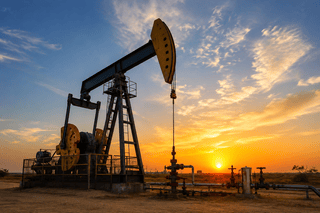
Pakistan’s recoverable oil and gas reserves have increased to around 3.72 billion barrels of oil equivalent (BOE) as of June 2026. New discoveries and increases in some existing reserve estimates have offset the impact of declines in older and producing sectors.
According to research by Arif Habib Limited (AHL), based on data from the Pakistan Petroleum Information Service, the country’s oil reserves increased by 15 percent year-on-year to 276 million barrels in June 2026. These reserves were 240 million barrels in June 2025.
Natural gas reserves also increased by 9 percent to 20,664 billion cubic feet, compared to 18,981 billion cubic feet a year earlier. The increase in overall reserves has brought Pakistan’s estimated hydrocarbon reserve life to around 19 years.
The Bargzai field contributed significantly to the increase in oil reserves. The estimated reserves of this field increased from 21.01 million barrels in December 2025 to 49.09 million barrels in June 2026. Mardan Khel, Mamikhel South, Muramzai and Spin Wam also recorded an increase in reserves.
New discoveries also supported the overall reserves. Five new fields including Spin Wam, Bargzai, Batrasim East, Chakar and Fakhar added a total of 53.52 million barrels of oil and 772.97 billion cubic feet of gas to the national reserves.
Gas reserves increased significantly from Mari Ghazi and Spin Wam. Mari Gas reserves increased by 74 percent year-on-year to 1,723 billion cubic feet, while Spinwam reserves increased more than fivefold to 489 billion cubic feet.
However, reserves did not increase in all fields. Some old oil reserves, including Nashpa, Adhi, Pisakhi, Maki East, Kinar and Sono, declined. Similarly, gas reserves in Sui, Kandhkot, Nashpa, Ach and Qadirpur also declined.
Among the major exploration and production companies, OGDC‘s oil reserves increased by 16 percent to 152 million barrels, while Pakistan Petroleum Limited‘s reserves increased by 58 percent to 33 million barrels. Mari Energies’ oil reserves increased by 5 percent to 10 million barrels, while Pakistan Oilfields’ reserves decreased by 5 percent to 14 million barrels.
In the gas sector, Mari Energy’s reserves increased by 15 percent to 6,353 billion cubic feet. In contrast, OGDC’s reserves decreased by 4 percent to 5,750 billion cubic feet, PPL’s by 3 percent to 2,178 billion cubic feet and POL’s by 2 percent to 211 billion cubic feet.
The data shows that new discoveries and updated estimates of reserves in existing fields have largely balanced the decline due to production at the overall level. However, the long-term sustainability of Pakistan’s energy reserves will depend on the pace of new discoveries, development of discovered fields and utilization of existing reserves.
We welcome your contributions to The Pakistan Today. Submit your blogs, articles, press releases, news story pitches and news features to our editorial team.
Please send your submissions to our News Desk or Editorial team. We look forward to hearing from writers, journalists and contributors.