

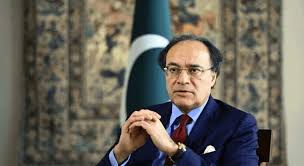
Pakistan will adopt a cautious strategy instead of rushing to borrow from the global capital markets According to Federal Finance Minister Muhammad Aurangzeb, the government’s priority is to reduce the pressure of external debt repayment, make debt management sustainable and increase access to global investors.
In an interview with Bloomberg, the Finance Minister said that the timing of obtaining funds from global markets, the value of the loan, the price and the repayment period will be decided keeping in mind the international financial conditions. According to him, there is no immediate need to borrow from global markets to meet external financing requirements in the current fiscal year. The government is also looking at the possibility of converting some short-term external loans into long-term loans.
Muhammad Aurangzeb said that Pakistan issued bonds worth $750 million privately in April, while about three weeks ago, Eurobonds worth $3 billion were issued. According to him, the demand for these bonds was almost double the stipulated volume. Investors from Asia, the Middle East, Europe and the United States also participated in the issuance. The Finance Minister called it Pakistan’s return to global capital markets after a gap of four years.
Access to China’s bond market is also an important part of the government’s fiscal strategy. According to the Finance Minister, Pakistan has entered the Panda Bond market through credit enhancement. There are plans to issue more bonds under the $1 billion programme, while Panda Bonds worth $250 million have been issued so far. The government is also working on the possibilities of Islamic Sukuk and digital tokenisation.
The Finance Minister said that Pakistan’s sovereign credit rating has improved three times since April last year, and if the current progress continues, it is expected to achieve a B+ rating by the beginning of next year. The government’s long-term goal is to further improve the rating and enter the double B category.
Referring to the economic situation, he said that Pakistan’s foreign exchange reserves are equivalent to about three months of imports, while three years ago these reserves were sufficient for only two weeks of imports. According to him, the economic growth rate in the last fiscal year was 3.7 percent and it is expected to improve further in the current fiscal year.
Muhammad Aurangzeb added that the government wants to promote trade and investment instead of relying on aid. Trade talks with the US are also ongoing. However, the potential impact of the Middle East conflict on inflation and economic growth is being monitored.
The real challenge for Pakistan is not only to obtain capital from global markets but also to maintain economic stability by controlling the cost of loans, repayment period and overall external debt level.
We welcome your contributions to The Pakistan Today. Submit your blogs, articles, press releases, news story pitches and news features to our editorial team.
Please send your submissions to our News Desk or Editorial team. We look forward to hearing from writers, journalists and contributors.