
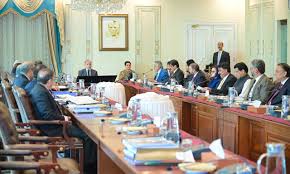
The National Economic Council (NEC) has approved a cut of over Rs1 trillion in development expenditure for the fiscal year 2026-27, indicating a significant change in the fiscal priorities of the federation and the provinces. The government maintains that the decision was taken keeping in mind the needs of fiscal stability and national security, however, experts are calling it a major challenge to the development pace.
According to the revised decision, the size of the overall development program has been reduced from Rs4.264 trillion to Rs3.218 trillion. The biggest impact was on provincial development projects, where a total of about Rs920 billion was cut.
According to the data, Punjab suffered the biggest blow, where the development program was almost halved. The province’s annual development plan was reduced from Rs1.455 trillion to Rs749 billion. On the other hand, Sindh faced a relatively small decline while Balochistan managed to almost maintain its development volume.
According to sources, the government had to review development expenditure due to increasing fiscal pressure, heavy debt repayments and IMF program targets. With about 74 percent of government revenue being spent on debt repayment alone, the financial capacity available for development projects has been limited.
Federal Minister for Planning Ahsan Iqbal clarified that most of the resources in the coming fiscal year will be spent on completing ongoing projects, while approval of new projects will be extremely limited. According to him, only important projects related to defense and interior have been exempted.
In economic circles, the decision is also being linked to national security priorities. Government sources say that a part of the resources generated by saving in development funds can be shifted towards water resources, security and other strategic projects. Projects like Diamer-Bhasha Dam are awaiting additional financial support, while a total of Rs103 billion has been allocated for the water sector.
Prime Minister Shehbaz Sharif, in his statement after the NEC meeting, said that further strengthening the defense capabilities is the need of the hour in the context of the security threats facing the country and the ongoing war on terrorism. He also declared economic stability as well as the promotion of exports, industry and employment as national priorities.
Interestingly, despite a significant reduction in the development budget, the government has maintained the target of 4 percent GDP growth for the next fiscal year. According to experts, this target will be possible only when there is a significant improvement in private investment, exports and industrial production.
Analysts say that although cutting spending seems inevitable for fiscal discipline, its impact on long-term growth, infrastructure improvement and investment in human resources should be closely examined. It will be clear in the coming months whether the government is able to strike the desired balance between growth and stability despite limited resources.