
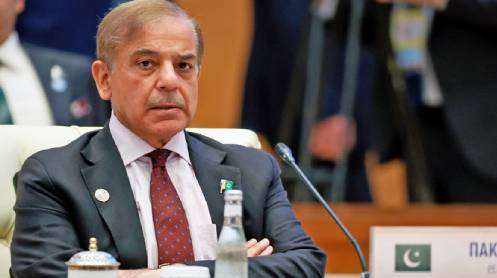
Islamabad: Prime Minister Shehbaz Sharif has directed to ensure timely implementation of the targets and timelines set under the privatization programme and has urged the relevant ministries and institutions to maintain mutual cooperation and effective coordination in all stages of privatization so that the reform process can move forward as per the set schedule.
In a meeting chaired by the Prime Minister, the Ministry of Privatisation gave a detailed briefing on the latest progress related to the privatisation of various government institutions. According to officials, a total of 27 government institutions are currently on the privatisation agenda, which are being worked on in three different phases. The government maintains that the aim of this process is to improve the performance of government institutions, promote private investment and reduce the financial burden on the economy.
The meeting also reviewed the progress related to the privatisation of Islamabad, Lahore and Karachi airports, while with regard to electricity distribution companies IESCO, FESCO and GEPCO, officials said that Expression of Interest (EOI) has been issued for the three institutions. The last date for receiving documents from investors for FESCO has been set as August 7, for GEPCO as August 21 and for IESCO as September 7, 2026. Officials informed the meeting that several international companies have shown interest in these distribution companies, while road shows are also being organised in different cities to attract investors. According to government officials, the aim of these measures is to ensure a transparent and competitive privatisation process.
Prime Minister Shehbaz Sharif, while giving special instructions regarding the privatisation of the Agricultural Development Bank, said that the privatisation procedure should be structured in such a way that the bank’s fundamental role in the agricultural sector is maintained. He said that there should be no disruption in the provision of agricultural loans, financial assistance and other facilities to farmers, as the strength of the agricultural sector is very important not only for the economy but also for the country’s food security.
At the end of the meeting, the Prime Minister directed the relevant institutions to strictly follow transparency and professional standards and set timelines in all stages of privatisation. According to observers, the government is describing the privatization process as part of broader economic reforms, through which efforts are being made to increase investment opportunities, improve the performance of institutions, and make the national economy more efficient, while public interest and continuity of essential services are also being described as important components of the policy.