


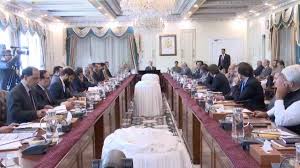
Prime Minister Shehbaz Sharif has termed the joint defence agreement signed between Pakistan, Saudi Arabia and Turkey in Mecca as a significant development for peace and stability in the region.
Speaking at a meeting of the federal cabinet, the prime minister said that the aim of the agreement is not to act aggressively but to strengthen collective defence. He linked this cooperation with peace, tranquillity and development in the region.

The three countries signed the agreement on August 7 in Mecca. Prime Minister Shehbaz Sharif, Saudi Crown Prince Mohammed bin Salman and Turkish President Recep Tayyip Erdogan played a role in the completion of this agreement.
Under an important clause of the agreement, an attack on any member country will be considered an attack on all three countries. The aim of this clause is to strengthen joint defence response and mutual cooperation.
According to the prime minister, the defence ties between Pakistan and Saudi Arabia are not new. A strategic mutual defence agreement was also signed between the two countries in September 2025. Pakistan and Turkey have also been engaged in defence and security cooperation for a long time.
Shahbaz Sharif said that the current agreement brings the existing ties into a broader trilateral framework. According to him, it can create new possibilities for cooperation not only among the three countries but also in the Muslim world.
Deputy Prime Minister and Foreign Minister Ishaq Dar also highlighted the defence aspect of the agreement. According to him, the agreement is not against any specific country. He also linked the right to collective defence to Article 51 of the United Nations Charter.
The agreement has also received international reactions. The Organization of Islamic Cooperation called it an important strategic step. Various countries, including Kuwait, Bahrain and Somalia, have also welcomed the agreement.
The response from Iran also supported a cooperative security system among regional countries. This shows that the agreement is also being seen in the broader security context of the region.
On the other hand, the political situation in Azad Jammu and Kashmir was also an important part of the Prime Minister’s address. Shahbaz Sharif supported talks with the protesting groups.
The Prime Minister said that there should be a path of dialogue for those who want to present their demands peacefully. However, according to him, lawlessness and unrest cannot be accepted.
Regarding the ongoing differences on various issues, including the seats of refugees in Azad Kashmir, the Prime Minister said that these issues can be resolved constitutionally through a new assembly.
He also referred to the All Parties Conference held in Muzaffarabad before the elections. According to the Prime Minister, detailed discussions were held on various political issues in the meeting.
Shahbaz Sharif described the performance of the PML-N in the Azad Kashmir elections as public support. According to him, the PML-N is in a position to form the government based on the available results.
The security situation in the country was also discussed in the federal cabinet. The Prime Minister paid tribute to the citizens and security personnel who lost their lives in recent terrorist attacks.
He mentioned the August 2 suicide attack in Swat and the attack on a police check post in Hangu. The Prime Minister also appreciated the sacrifices of security personnel who were martyred during operations in North Waziristan and Hangu.
According to the Prime Minister, operations against terrorism are continuing with full intensity. He said that the sacrifices of security personnel will form the basis for establishing lasting peace in the country.
The cabinet also expressed grief over the death of PML-N Member of National Assembly Malik Muhammad Iqbal Chanar. The meeting prayed for the departed soul and the martyrs of the personnel who were martyred in the war against terrorism.
Overall, three major aspects were highlighted in the Prime Minister’s address: Pakistan’s regional defence ties, the resolution of political tensions in Azad Kashmir and ongoing operations against terrorism in the country. The government’s position regarding the Mecca Agreement is clear: its main objective is mutual defence and regional stability.