

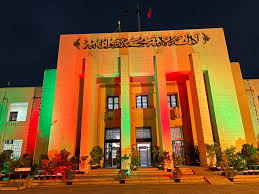
During the debate on the issue of the establishment of new provinces and administrative units in the Sindh Assembly, differences between the government and the opposition came to the fore. Government members opposed the division of Sindh, while opposition members stressed the need to create administrative units without dividing the province and transfer powers to the lower level.
Sindh Chief Minister Syed Murad Ali Shah made it clear in the house that the division of Sindh is not acceptable in any way. He said that the issue of formation or division of provinces is decided under the constitutional procedure and no compromise will be made on the unity of Sindh in this regard.
Murad Ali Shah said that the decision to create new provinces in Sindh is under discussion at the forum of the provincial assembly. According to him, the proceedings of the House will also make it clear who is standing firm against the division of Sindh.
The Chief Minister also questioned the opposition’s stance that on the one hand some parties oppose the division of Sindh and on the other hand talk about creating administrative units. He termed it a contradictory political stance.
Citing the historical background, Murad Ali Shah said that the Sindh Assembly had played its role in important political decisions even before the formation of Pakistan. According to him, the historical and political identity of Sindh cannot be separated from the issue of division.
He also criticized the establishment of One Unit and said that his party still considers this system wrong. According to the Chief Minister, keeping in mind the past experiences, no plan to divide Sindh will be supported.
Opposition’s stance
The Leader of the Opposition in the Sindh Assembly and MQM Pakistan leader Ali Khorshi criticized the government’s stance and said that his party is not talking about dividing Sindh but is in favor of new administrative units for better management.
Ali Khorshidi said that after the 18th Amendment, powers should be devolved to the lower levels. According to him, there are administrative problems in the province and their solution lies in effective local government and devolution of powers to the lower levels.
He said that the people of Sindh have the right to know who is talking about the division of the province. According to him, the PPP has tried to incite linguistic division in the province by making this sensitive issue a part of the political debate.
Referring to the current administrative problems in Sindh, Ali Khorshidi said that the provincial government should primarily focus on improving governance and public services. He said that the proposal to create administrative units should not be considered synonymous with the division of Sindh.
PPP’s categorical stance
PPP leader Faryal Talpur also opposed the division of Sindh and said that her party will not allow the division of the province.
Speaking in the Sindh Assembly, Faryal Talpur said that her family has fought politically for Sindh and they stand to defend the unity of the province.
Defending the development initiatives of the Sindh government, she said that the work done in the province can be seen at the ground level. She said that the services of the PPP in the politics of Sindh and the development of the province cannot be ignored.
Where is the real difference?
The main difference in the current debate is between the concept of division of Sindh and administrative units. The government and the PPP are rejecting any plan to divide Sindh, while the MQM-P and some other opposition members say that creating new units for administrative convenience is not tantamount to dividing the province.
This debate has come at a time when the Sindh Assembly is also discussing the administrative structure of the province, distribution of powers and the role of local governments. In the recent proceedings, both the government and the opposition have made their respective positions clear on the unity of Sindh.
The issue has resurfaced a sensitive debate in Sindh politics. On one hand, the provincial government is pushing for maintaining Sindh’s current status on historical, political and constitutional grounds, while the opposition is calling for administrative reforms and devolution of powers to the grassroots.
We welcome your contributions to The Pakistan Today. Submit your blogs, articles, press releases, news story pitches and news features to our editorial team.
Please send your submissions to our News Desk or Editorial team. We look forward to hearing from writers, journalists and contributors.