

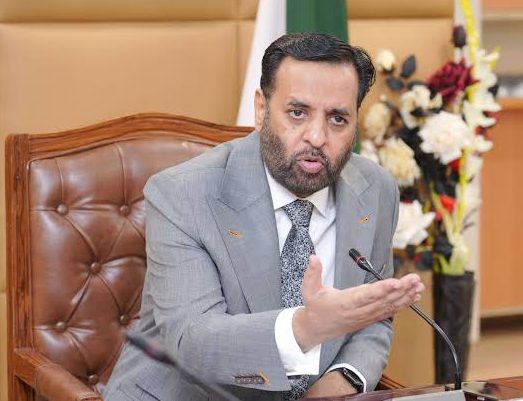
Federal Health Minister Mustafa Kamal has proposed a major change in the management system of government hospitals. He says that instead of permanent government employees, hospitals should have a system of contract jobs based on performance.
Mustafa Kamal said in a TV interview on Sunday night that a Chief Executive Officer (CEO) can be brought in from the private sector to run government hospitals in a better way. According to him, the CEO should be given the authority to appoint and dismiss employees.
The Health Minister said that an employee who performs well should be given the opportunity to continue working. An employee who does not fulfill his responsibility should be removed. He said that the hospital budget should be approved by the government and the administration should be made responsible for performance and results.
This proposal came after the death of 14 newborns at the Pakistan Institute of Medical Sciences (PIMS) in Islamabad. This tragic incident occurred on August 26 when a fire broke out in the gynaecology ward of PIMS. The government investigation has identified several shortcomings in the hospital’s management and security system.
Mustafa Kamal said that the PIMS investigation revealed that the fire spread very quickly. According to him, it took about two minutes for the fire to spread from the first flame to the entire ward.
The Health Minister also took the position that running the hospital is not the primary job of the federal minister. According to him, if Islamabad is made a separate administrative unit and there is a directly elected mayor here, the responsibility of managing the hospital should be given to the elected local leadership.
He said that the federal minister should focus on the country’s overall health policy. Running the day-to-day management of any single hospital should not be the minister’s responsibility.
Mustafa Kamal also said that during the tenure of the former executive director of PIMS, there was a fire in a nursing hostel. According to him, he came to know about the incident later. An internal investigation was also conducted into the matter.
The Health Minister also spoke about the news regarding his resignation. He said that he has presented himself for accountability in the PIMS incident. According to him, he accepts political and administrative responsibility as a minister.
On the other hand, the new executive director of PIMS, Dr Muhammad Salman, assumed charge of his post on Sunday. He is also the chief executive officer of the National Institutes of Health (NIH). The government has appointed him as the executive director of PIMS.
After assuming charge, Dr Salman visited different departments of the hospital. He reviewed the arrangements and also called a meeting of the heads of different departments.
Dr Salman said that the current situation is difficult, but he will try to fulfil his responsibility. According to him, the recommendations of the investigation committee will be implemented, and the safety of patients will be the top priority.
The new executive director said that the immediate goal is to prevent such incidents from happening again. Other potential risks present in the hospital will also be reviewed.
He also called the high number of patients in PIMS a major problem. According to him, patients will be better managed, and efforts will be made to strengthen the referral system so that needy patients get proper and timely treatment.
The government has also initiated action against several senior officials after the PIMS incident. Prime Minister Shehbaz Sharif approved the suspension of eight officials and departmental and criminal action against the concerned individuals in light of the recommendations of the investigation committee.
Overall, the PIMS incident is raising new questions about the administrative authority, employee accountability, patient safety and emergency response system in government hospitals. The proposal of the Health Minister and the priorities of the new Executive Director indicate that the government now wants to focus more on administrative reforms and safety measures.
We welcome your contributions to The Pakistan Today. Submit your blogs, articles, press releases, news story pitches and news features to our editorial team.
Please send your submissions to our News Desk or Editorial team. We look forward to hearing from writers, journalists and contributors.