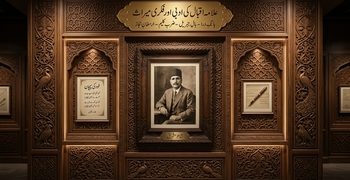

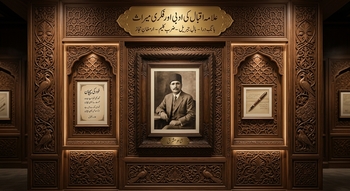
Pakistan is observing Allama Iqbal Day today (Monday) to mark the 149th birth anniversary of national poet and philosopher Dr Allama Muhammad Iqbal, with special programmes highlighting his political vision, literary achievements and influence on the country’s ideological development.
President Asif Ali Zardari and Prime Minister Shehbaz Sharif have issued separate messages paying tribute to Iqbal, whose poetry and political thought helped awaken a sense of identity and political awareness among Muslims of the subcontinent.
The President highlighted Iqbal’s emphasis on human dignity, equal opportunities and social justice. He said the national poet’s writings challenged exploitation and drew attention to the rights of workers and disadvantaged communities.
He also encouraged young people to take inspiration from Iqbal’s poetry to develop critical thinking, intellectual curiosity and confidence.
Prime Minister Shehbaz Sharif said Iqbal’s philosophy continued to provide guidance for individual and collective development. He described the poet’s intellectual contributions as an important source of inspiration for younger generations.
The Prime Minister also announced the beginning of year-long national and international celebrations marking Iqbal’s 150th birth anniversary. The programme will continue until November 9, 2027, and include international conferences, research seminars, literary festivals, exhibitions and educational activities.
Born in Sialkot on November 9, 1877, Iqbal is widely recognised for his role in shaping Muslim political thought in British India. His poetry encouraged Muslims to recognise their distinct identity and consider their political and social future.
His historic Allahabad address in 1930 remains an important part of the history of the Pakistan Movement. During the address, he presented the idea of consolidating Muslim-majority regions in northwestern India into a political unit. His vision contributed to the intellectual discussion that later shaped the demand for Pakistan.
Iqbal’s contribution extended beyond politics. His philosophical writings explored Islamic teachings, spirituality, human responsibility and the relationship between individuals and society.
One of the central ideas in his philosophy is Khudi, or selfhood. Through this concept, he encouraged individuals to develop confidence, knowledge, discipline and a strong sense of responsibility.
His poetry also reflected his deep connection with Islam and his admiration for Prophet Muhammad (Peace Be Upon Him). He emphasised spiritual development, Muslim unity, justice and the importance of applying Islamic values in personal and collective life.
Books such as Bang-e-Dra, Bal-e-Jibril, Zarb-e-Kalim and Asrar-e-Khudi remain important works of Urdu and Persian literature. His poetry continues to be read and discussed in educational institutions and literary circles in Pakistan and other countries.
Iqbal also placed particular importance on young people, whom he regarded as central to the future of society. His symbolic image of the Shaheen represents ambition, courage, independence and the pursuit of higher goals.
The government has declared November 9 a public holiday across Pakistan. Public and private offices, educational institutions and the State Bank of Pakistan are observing the holiday.
Special programmes, seminars and literary gatherings are being arranged to highlight Iqbal’s life and intellectual contributions. Media organisations are also broadcasting programmes featuring his poetry and philosophical ideas.
His legacy continues to raise important questions about education, social equality, independent thinking and national development. His writings encourage readers to connect personal progress with broader responsibilities towards society.
As Pakistan begins preparations for Iqbal’s 150th birth anniversary, the year-long programme is expected to provide opportunities for academic research and wider public engagement with his work.
More than a century after his birth, Iqbal’s contribution remains an important part of Pakistan’s literary, political and intellectual history. His teachings continue to offer a framework for discussions about individual dignity, social justice, education and the country’s future.