
The visit of United Nations Secretary-General António Guterres to Pakistan has carried significance far beyond the diplomatic protocol of a high-level visit. At a time when the international system is facing wars, geopolitical rivalries, humanitarian crises and growing doubts about the effectiveness of multilateral institutions, Islamabad has emerged as a place where the language of dialogue, mediation and peaceful settlement is once again being heard.
During his October 2026 visit, Guterres offered strong recognition of Pakistan’s contribution to international diplomacy. He praised Pakistan’s “pivotal role” in helping create conditions for dialogue between the United States and Iran and said Islamabad’s efforts contributed to the June 17 Islamabad Memorandum of Understanding, the subsequent ceasefire and a framework for future negotiations. He also delivered a direct message from Islamabad: conflicts must end, diplomacy must return and international law must prevail.
This recognition highlights Pakistan’s diplomatic role and its ability to contribute to international peace and stability. Beyond economic and strategic strength, a country can build global influence through trust, constructive communication and the ability to bring different sides closer together. Pakistan’s recent diplomatic efforts demonstrate its potential to serve as a bridge between nations and play a constructive role in shaping a more peaceful and cooperative world.
The most significant message emerging from the visit is that Pakistan increasingly wants to be seen as a bridge between conflicting sides rather than another participant in confrontation.
The US-Iran crisis has threatened not only regional stability but also international trade and energy security. The Strait of Hormuz is a crucial artery for global commerce, and prolonged instability there can affect energy supplies, shipping costs and economies far beyond the Middle East. In such circumstances, diplomacy is not an abstract ideal; it is an instrument for protecting human lives and the global economy.
Pakistan’s facilitation of dialogue therefore has implications well beyond its own borders. The Islamabad process demonstrates that middle powers can sometimes create diplomatic space when major powers are locked in confrontation. Pakistan’s credibility with different regional and international actors gives Islamabad an opportunity to facilitate communication when direct engagement becomes politically difficult.
Guterres’s praise therefore represents more than a compliment. It acknowledges that diplomacy conducted by countries such as Pakistan can contribute to preventing conflicts from becoming wider catastrophes.
The visit also highlighted Pakistan’s longstanding commitment to the United Nations and multilateralism.
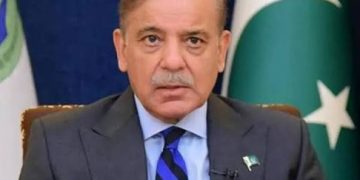
Prime Minister Shehbaz Sharif, while welcoming Guterres, reaffirmed Pakistan’s support for an effective, inclusive and representative UN. He stressed the importance of conflict prevention, peaceful settlement of disputes, peacekeeping and peacebuilding at a time when multilateralism faces serious challenges.
This vision is significant at a time when the international community needs stronger cooperation, responsible leadership and renewed faith in multilateral institutions. Pakistan has consistently championed dialogue, negotiation and peaceful engagement, demonstrating that even complex international challenges can be addressed through diplomacy. Its message is clear: lasting peace is built through communication, mutual understanding and collective action, and Pakistan is ready to contribute to that global effort.
That principle was given concrete form when the UN Security Council unanimously adopted Pakistan-sponsored Resolution 2788 in July 2025. The resolution calls for stronger mechanisms for the peaceful settlement of disputes and encourages negotiation, mediation, conciliation, confidence-building and preventive diplomacy. All 15 Security Council members voted in favour.
The importance of Resolution 2788 has grown amid the crises of the present era. It reinforces the principle that diplomacy should begin before violence becomes inevitable, not after thousands of lives have already been lost.
Pakistan’s contribution to international peace is not limited to one mediation effort.
For decades, Pakistani personnel have served in UN peacekeeping missions, often in difficult and dangerous environments. Pakistan has also consistently advocated dialogue, peaceful settlement of disputes, sovereignty, self-determination and international cooperation.
The country’s diplomatic record includes its role in bringing the issue of Islamophobia before the international community. In 2022, the UN General Assembly unanimously adopted a resolution establishing March 15 as the International Day to Combat Islamophobia, encouraging international efforts to promote tolerance, respect for human rights and religious diversity.
Pakistan has also carried a substantial humanitarian responsibility through its long-term hosting of Afghan refugees. During his visit, Guterres acknowledged Pakistan’s humanitarian role and stressed the importance of ensuring that the return of Afghans is voluntary, safe and dignified.
These efforts demonstrate a broader philosophy: peace is not simply the absence of war. Peace also requires humanitarian responsibility, respect for human dignity and cooperation among nations.
What Can Guterres’s Visit Change?
First, it can strengthen Pakistan’s image as a responsible diplomatic actor. For years, Pakistan’s international identity has often been dominated by security and geopolitical narratives. Guterres’s acknowledgement provides an opportunity to project another Pakistan: a Pakistan of mediation, peacekeeping, humanitarian responsibility and constructive diplomacy.
Second, it can create greater international confidence in Islamabad as a venue for dialogue. If Pakistan can successfully facilitate communication between major powers, its diplomatic capital could increase. That may open new opportunities for Pakistan to contribute to regional peace initiatives involving Afghanistan, the Middle East and other areas of conflict.
Third, the visit can strengthen Pakistan’s relationship with the United Nations. At a time when the credibility of multilateralism is under pressure, Pakistan can position itself as a consistent supporter of the UN Charter and peaceful dispute resolution.
Most importantly, the visit can encourage Pakistan itself to invest more seriously in diplomacy. A country that seeks international influence must combine diplomatic ambition with economic stability, institutional strength, democratic continuity and social development. Global respect is strongest when diplomatic credibility is supported by domestic progress.
Guterres’s visit should therefore not be viewed merely as a diplomatic honour for Pakistan. It should be treated as a responsibility.
The world needs countries capable of talking to everyone. It needs states willing to mediate when others are unwilling to communicate. It needs institutions that can prevent disputes before they become wars.
Pakistan has an opportunity to occupy that space.
The message from Islamabad should be clear: military power may win battles, but diplomacy creates the possibility of lasting peace. Negotiation is not weakness, mediation is not surrender, and dialogue is not a sign of indecision. They are instruments through which nations protect their people and prevent the next crisis.
As Guterres’s visit demonstrated, Pakistan can make its voice heard not only through power but also through peace.
At a moment when the world is searching for pathways out of confrontation, Islamabad can become more than a capital where diplomatic meetings take place. It can become a place where difficult conversations begin.
The challenge now is to transform international recognition into sustained diplomatic leadership and ensure that Pakistan’s message of dialogue, peace and multilateral cooperation becomes not merely a statement but a lasting contribution to a safer world.
Imran Shoukat is a lecturer in political science from District Toba Tek Singh, Punjab. His areas of interest include education, governance, public policy and social development. Through his writings, he explores issues affecting Pakistan’s education system and broader social and institutional development.
We welcome your contributions to The Pakistan Today. Submit your blogs, articles, press releases, news story pitches and news features to our editorial team.
Please send your submissions to our News Desk or Editorial team. We look forward to hearing from writers, journalists and contributors.