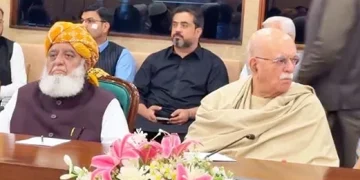


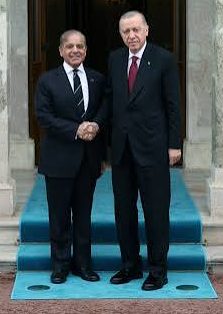
Continuing his engagements in Istanbul, Prime Minister Shehbaz Sharif stressed Pakistan’s commitment to transforming its enduring political friendship with Turkey into a stronger and more dynamic economic partnership, encouraging Turkish businesses to expand their presence in key sectors of Pakistan’s economy.
President Recep Tayyip Erdogan said the two governments had agreed to accelerate efforts to achieve the previously announced annual bilateral trade target of $5 billion, describing economic cooperation as a central pillar of relations between the two brotherly countries.

The Turkish president said officials from both countries had reviewed practical steps to strengthen trade and investment, identifying new avenues for long-term cooperation. He stressed that the growing trade relationship should reflect the deep strategic trust that has long defined Pakistan-Turkey relations.
Erdogan revealed that talks are underway to establish a Special Economic Zone (SEZ) for Turkish investors in Karachi. He said the move would provide a conducive environment for businesses to expand operations while promoting industrial cooperation and facilitating greater bilateral investment.
He also confirmed that talks were progressing to expand the scope of the existing Preferential Trade Agreement (PTA), a move expected to improve market access and increase trade volume between the two countries.
The Turkish president expressed confidence that strong business-to-business ties would play a key role in opening up new investment opportunities. He encouraged companies on both sides to deepen trade partnerships and explore emerging sectors that offer long-term growth.
Highlighting another important dimension of the bilateral relationship, Erdogan described defence cooperation as one of the strong foundations of Pakistan-Turkey economic ties. He said that the two countries are successfully advancing several joint defence initiatives, adding that ongoing projects will further strengthen strategic cooperation and industrial cooperation.
In addition to defence, the Turkish leader identified energy, transport infrastructure, key minerals and information technology as priority areas where the two governments intend to enhance cooperation. He expressed hope that the agreements reached during the visit will accelerate economic integration and bring tangible benefits to businesses and citizens alike.
Turning to regional issues, Erdogan praised Pakistan’s diplomatic efforts, which played a significant role in reducing tensions between Iran and the United States. He said that the progress achieved through the Islamabad Memorandum of Understanding has created a positive environment for regional stability and demonstrated Pakistan’s constructive role in international diplomacy.
He acknowledged that the negotiations leading to an understanding have been challenging but praised the commitment of the Pakistani leadership to peaceful negotiations. According to Erdogan, Ankara will continue to support any diplomatic initiative aimed at reducing tensions and promoting sustainable peace in the region.
The Turkish president also expressed concern over developments that undermine regional stability, stressing that conflicts should be resolved through diplomacy rather than military confrontation. He reiterated Turkey’s support for peaceful dialogue and cooperative regional engagement.
Earlier in the day, Prime Minister Shehbaz addressed the Pakistan-Turkey Business Forum, where he called on investors and business leaders to seize the opportunities emerging from Pakistan’s improving economic scenario.
Addressing leading businessmen, government officials and investors from both countries, the prime minister said that Pakistan is entering a new phase of economic stability and reforms, making it an attractive destination for foreign investment.
He said that the long-standing friendship between Islamabad and Ankara has laid a strong foundation for expanding trade cooperation but stressed that the two countries must now convert decades of goodwill into measurable economic achievements.
“Our friendship has always been exceptional,” the prime minister told the participants, adding that now is the time to transform this relationship into major investments, strong industrial partnerships and broader business cooperation.
Highlighting Pakistan’s recent diplomatic efforts to promote peace in the region, Shahbaz said that stability is essential for sustainable economic growth and investor confidence. He acknowledged the support extended by Turkey during these initiatives, calling it another reflection of the shared understanding between the two governments.
Praising President Erdogan’s economic vision, the prime minister said that Turkey’s transformation in the past two decades has become an example for many developing economies. He pointed to the remarkable progress in manufacturing, infrastructure, technology, agriculture and the automotive industry, saying that these achievements demonstrate the benefits of continuous economic planning and industrial development.
The Prime Minister encouraged Turkish companies to invest in Pakistan’s strategic sectors, including energy, mining, infrastructure, logistics, information technology, telecommunications, manufacturing, agriculture and privatisation projects.
He assured investors that Pakistan is implementing policies designed to improve the ease of doing business while creating a transparent, predictable and investor-friendly regulatory environment.
Shahbaz Sharief also highlighted the role of the Special Investment Facilitation Council (SIFC) in streamlining investment procedures. He said the council is working with federal and provincial authorities to expedite approvals and remove administrative hurdles to provide a one-window facility for international investors.
During separate meetings with senior executives representing some of Turkey’s leading business groups, the prime minister reiterated Pakistan’s readiness to welcome greater Turkish investment and invited companies to explore long-term partnerships in high-growth sectors.
Business leaders from both countries expressed optimism over Pakistan’s improving macroeconomic outlook and reiterated their interest in expanding trade cooperation through joint ventures, industrial partnerships and technology sharing initiatives.
The talks reflected a shared commitment to broadening economic engagement beyond traditional trade, with both governments seeking to create new opportunities that would contribute to sustainable growth, innovation and job creation in the years to come.