
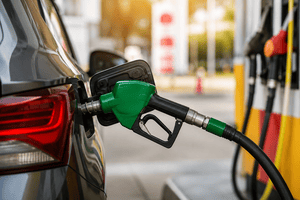
The government has stepped up its attempts to make the price system of petroleum products more transparent, predictable and rule-based. The measures to improve transparency of the market and make the energy sector more efficient, along with the information about the pricing mechanism, have been discussed in detail in a high-level committee set up under this objective and have been agreed upon.
Petroleum Minister Ali Pervaiz Malik chaired the meeting, which was dedicated to the current situation of the global oil market and the system of local pricing and the future reforms. It was pointed out in the meeting that there was a need to strike a balance between international oil price movements, local economic considerations and the interests of the consumers in the pricing of the petroleum products.
The meeting also discussed the pricing structure followed in various countries for adopting a pricing mechanism which will be transparent, competitive and effective for monitoring.
The committee members recommended that OGRA make its website accessible to publish petroleum product reference price data every day. The action is a bid to educate the consumer base, business communities and other market stakeholders of the impact of international market movements on local prices.
The meeting also discussed the future operations of the Petroleum Price Stabilisation Fund. The participants agreed that the fund should be governed by clear rules, transparent principles and non-arbitrary decisions which will enable the use of the fund to be more effective and reliable in case of abnormal price fluctuation.
Likewise, an agreement was made on the project for linking the oil supply chain with a modern digital system. The digitisation is expected to enhance the monitoring of different stages of import, storage, transport and/or sale, which will lead to better transparency and a decrease of administrative mistakes, according to the officials.
Speaking at the meeting, Petroleum Minister Ali Pervez Malik said the Middle East and the situation in the Strait of Hormuz are adding to the uncertainty in global energy markets. In this context, Pakistan should make its petroleum pricing system stronger, more flexible and transparent and thus be better equipped to manage the impact of external shocks, he added.
The petroleum minister said on the basis of the report of an international consulting firm, petrol prices in Pakistan are lower than in Bangladesh, Sri Lanka and Turkey, whereas close to that of India based on available comparative analysis. He, however, added that the benchmark of pricing should not just be done against other countries in the region, but the local tax rules, import costs, currency situation and government fiscal policies should also be taken into consideration.
The meeting also highlighted some key proposals for the diesel sector. The petroleum minister said the government is making efforts for such policy changes that can boost the capacities of local refineries and slowly ease incremental reliance on imported diesel. He says that boosting local production will not only help save foreign exchange but also boost the self-reliance of the energy sector.
Measures like clear pricing in the energy policy, boosting local refining capacity and digitising the energy supply chain can boost market performance in the long run, experts say. But effective implementation, institutional coordination and continuous monitoring are critical to the success of these reforms.
The next meeting of the committee set up to decide petroleum prices will be key, where the reform recommendations will be finalised, sources said. Later, these recommendations will be sent to the Prime Minister for approval, whereupon, after their approval, the way can be paved for the implementation of new reforms in the petroleum sector.
In view of the Pakistan energy sector problems, the fluctuations in global oil prices and the fiscal requirements in the country, this government initiative can pave the way for future, more transparent, understandable and stable petroleum pricing mechanisms that will benefit both the consumers and the energy sector in the long run.