

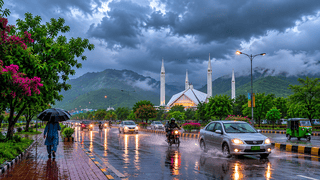
The proposed model for a possible major change in the administrative structure of the federal capital has been presented to Prime Minister Shehbaz Sharif. The recommendations of the high-level special committee include the proposal to establish an elected assembly for Islamabad and its own chief executive.
According to the proposed framework, a 27-member assembly can be established for the Islamabad Capital Territory. Of these, 21 members will be directly elected. It is proposed to reserve five seats for women and one for minorities.
The proposed electoral map proposes to create seven assembly seats within each constituency while maintaining the existing three constituencies of the National Assembly of Islamabad. Thus, the number of directly elected members will be 21.
In the new system, the assembly will elect its head. A proposal to name this post as the Chief Minister or Mayor is under consideration. The elected chief executive will be accountable to the assembly and will oversee the administrative affairs of the local government.
The proposed administrative structure recommends having 27 departments under the Islamabad government. It also proposes to transfer sectors like health, education, environment and civic amenities to the local government.
This model proposes to retain some key responsibilities with the federation. Law and order and master planning of Islamabad will remain under the federal jurisdiction. These matters will be handled by a federal ministry or a proposed administrative arrangement.
A change in the role of the CDA has also been proposed. The draft recommends transferring its powers and duties to the new local government of Islamabad. It is also proposed to include some other institutions working under the Islamabad Local Government Act in the new system.
Under the proposed system, the local government of Islamabad will be able to formulate its own rules and regulations for its administrative matters. In addition, it has been recommended to appoint a chief secretary and four secretaries to manage the city.
These officers will be entrusted with the supervision of various administrative groups and departments. On the other hand, federal institutions established for the whole country will continue to work in Islamabad with their existing federal responsibilities.
The proposal is to conduct the assembly elections through the Election Commission of Pakistan. This will also require comprehensive legislation to provide a legal basis for the new administrative structure.
The proposal is not limited to the local government system alone. It includes the concept of provincial-style administrative and financial autonomy for Islamabad. However, keeping key issues like law and order and master planning with the federation will require a clear demarcation of powers between the two levels.
The real challenge for the government will be to determine the financial resources and institutional responsibilities along with the transfer of powers. The transfer of powers to the CDA and other existing institutions could also be an important step at the practical level.
This draft is not yet a final law or an enforceable administrative system. Its final form will be clear after the Prime Minister’s review and the upcoming legal process. In addition to federal ministers Ahsan Iqbal and Mohsin Naqvi, Rana Sanaullah and Mosaddeq Malik have also played roles in the special committee.
If this proposal is approved, the current way of civil services, local legislation and administrative accountability in Islamabad could change significantly. However, the practical success of this model will depend on a clear division of powers, adequate financial resources, and effective communication between federal and local institutions.
We welcome your contributions to The Pakistan Today. Submit your blogs, articles, press releases, news story pitches and news features to our editorial team.
Please send your submissions to our News Desk or Editorial team. We look forward to hearing from writers, journalists and contributors.