


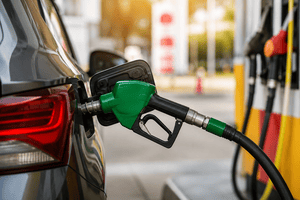
The federal government has made a significant change in the prices of petroleum products. The new decision has put a slight additional burden on petrol consumers, while diesel users have been given a big relief.
According to the Petroleum Division, the price of petrol will increase by Rs 2.97 per litre from August 20, 2026. After this, the new price of petrol has been fixed at Rs 337.51 per litre.


On the other hand, the price of high-speed diesel has been reduced by Rs 32.63 per litre. The new price has been fixed at Rs 363.6 per litre.
Thus, the difference between petrol and diesel in the new prices has come down to about Rs 25.55. Earlier, the difference in the prices of both the products was greater.
The latest official prices are also confirmed by OGRA’s petroleum price notification. The regulator has issued a notification of the new prices effective from August 19 on its website. OGRA’s petroleum price notification
This change has come at a time when Pakistan has made the mechanism for determining petroleum prices more dynamic. Local prices are changing rapidly due to oil prices in the global market and geopolitical tensions.
The situation was different in the previous revision. On August 19, petrol was priced at around Rs 334.54 and diesel at Rs 395.69 per litre.
After the new reduction, the price of diesel has come down by more than Rs 32 in a single phase. This change is of particular importance for the freight and agricultural sectors.
Diesel is widely used in trucks, buses, agricultural machinery and various industrial activities in Pakistan. Therefore, its price reduction can reduce the cost of doing business to some extent.
However, its impact may not be immediately visible on the price of every item. In addition to transport, the prices of goods are also affected by electricity, wages, raw materials and other supply chain costs.
An increase of about three rupees in petrol will, on the other hand, create additional expenses for ordinary consumers. Citizens using motorcycles and private vehicles can feel this change directly.
It is important for the government to maintain balance in the current situation. On the one hand, it is necessary to transmit the impact of global prices. On the other hand, limiting inflationary pressures is also an important objective of economic policy.
Continuous fluctuations in prices also create challenges for business planning. Transporters and industries rely on fuel prices to estimate their costs.
Recent data shows that local fuel prices have changed several times in August. Daily price changes have also been recorded in official and market sources.
A significant aspect of the new rates is the significant reduction in diesel. This decision by the government comes at a time when global factors have been significantly influencing the price of diesel.
The prices of petroleum products are not determined solely by the global crude oil price. Import costs, freight, exchange rates, taxes and other price-setting elements also affect the final price.
Therefore, linking the decrease or increase in local prices solely to the movement of global crude oil does not give a complete picture. OGRA takes into account relevant factors while setting prices.
After the latest decision, petrol will be available at Rs 337.51 per litre from August 20, while high-speed diesel will be available at Rs 363.06 per litre.
This decision has different implications for both consumers and the business sector. The significant reduction in diesel can help reduce production costs, while the increase in petrol will put a slight pressure on domestic travel expenses.
In the coming days, the global energy market, import costs and the value of the rupee will play a major role in determining the direction of local petroleum prices.