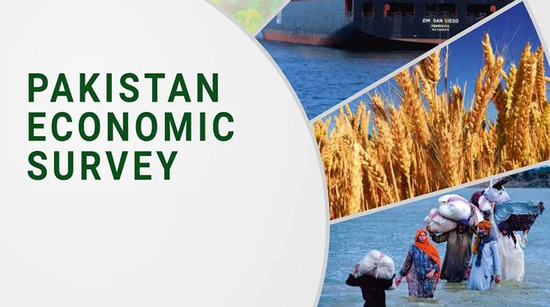
Pakistan’s economy has achieved a growth rate of 3.7% during the current fiscal year, which has come at a time when the country is going through a phase of economic stabilisation and recovery. The Economic Survey will be released on June 9, which will provide a detailed overview of the overall performance of the economy.
According to the data, the services sector contributed the most to the overall economic performance with a growth rate of 4.1%. The industrial sector grew at a rate of 3.5% while the agricultural sector grew at a rate of 2.9%, indicating that growth was not uniform across sectors.
According to economists, Pakistan’s current growth model is largely dependent on the services sector, while limited improvement in the industrial and agricultural sectors may pose a challenge to long-term sustainable growth.
On the other hand, there has been a relative improvement in inflation, where inflation was recorded at 6.2% during July-April. This is lower than in previous years and suggests that price pressures have eased somewhat.
However, experts caution that the temporary slowdown in inflation cannot be considered a complete stabilisation, as global commodity prices, energy prices and monetary policy could create renewed pressure in the future.
The Economic Survey, to be released by Federal Finance Minister Senator Muhammad Aurangzeb, is considered a key document in determining the country’s economic direction. It will include details of the fiscal deficit, exports, investment and other key economic indicators.
Analysts said the 3.7 percent growth rate reflects a “moderate recovery” with signs of improvement, but the need for structural reforms remains.
The figures will provide a basis for policymaking for the upcoming budget, especially in the areas of tax reform, agricultural production and industrial development.