


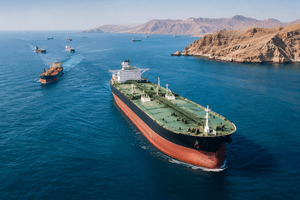
Iran has approved the basic principles of the strategic action plan related to the management of the Strait of Hormuz and the security of the Persian Gulf. The Iranian Parliamentary Committee for Councils confirmed this development after the meeting.
According to committee spokesman Valiullah Bayati, the members considered the plan’s proposals. After hearing different opinions, the meeting approved its general outline.


According to Iranian officials, the plan will focus on security and development issues in the Strait of Hormuz and the Persian Gulf. However, not all of its practical points have yet been revealed in detail.
The plan also includes a provision banning American and Israeli-owned or affiliated ships and related equipment from passing through the Strait of Hormuz. Iranian media has listed it as one of the plan’s key resolutions.
The decision comes at a time when shipping in the Strait of Hormuz is already under severe pressure. The ongoing tensions between the United States and Iran have also affected global shipping.
According to Reuters, the number of commercial ships passing through the strait has been much lower than usual in recent days. Only a few ships passed through the route on August 14, while more than 130 ships used to pass through it daily before the war.
The Strait of Hormuz is a crucial route for global energy trade. Large quantities of crude oil and other energy products from the Persian Gulf reach global markets through this passage.
For this reason, a prolonged blockage in the strait could put pressure on global oil supplies and prices. Its effects are not limited to the Middle East but could reach major import markets, including Asia.
Iran and the United States also have different positions on the management of the strait. Tehran is emphasizing its role and authority, while Washington emphasizes freedom of navigation.
Meanwhile, talks on the management of the strait have also been ongoing between Iran and Oman. However, broader political and economic differences remain over the issue of opening the strait.
Another important aspect of the recent developments is the stalemate in negotiations between the United States and Iran. The two countries have not yet reached a permanent agreement on the Strait of Hormuz, sanctions and other issues.
Iran’s latest parliamentary move makes it clear that Tehran is giving the Strait of Hormuz a central position in its regional strategy. Through this, Iran wants to advance its political and economic interests along with security.
However, there is a gap between the approval of the project and its practical implementation. Future steps, legal approval and regional reactions will determine the real significance of this decision.
For now, this move has once again made the Strait of Hormuz the centre of global diplomatic and economic attention. Further changes in the situation could directly affect global trade and energy markets.