


Iran has once again reacted strongly to the US stance on the Strait of Hormuz, saying that Washington should review its intelligence assessments of the situation in the region.
Iranian Foreign Minister Abbas Araqchi claimed in a statement on the social networking website X that the US has long relied on wrong estimates about Iran. According to him, the start of the war against Iran is also an example of the failure of US intelligence.

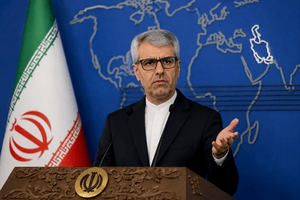
Araqchi said that Washington is now making another wrong estimate based on poor intelligence in the case of the Strait of Hormuz. He warned American policymakers that wrong intelligence can have more dangerous consequences than wrong information.
The Iranian Foreign Minister, making a religious reference in his statement, said that Allah is the greatest and has more power than any power on earth. He said that Iran trusts in Allah.
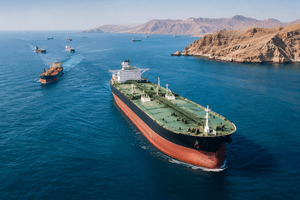
The statement comes at a time when the Strait of Hormuz has become a major issue in the ongoing tensions between Iran and the United States. The waterway, located between the Persian Gulf and the Gulf of Oman, is of exceptional importance for global energy trade, so global markets are closely watching any security developments related to it.
Earlier, US President Donald Trump made strong statements against Iran, claiming to dismantle the Revolutionary Guards and take full control of the Strait of Hormuz. He also severely criticized the Iranian leadership and the country’s economic situation.
Trump described some of the information coming from Iran as ‘fake news’ and also referred to the country’s financial resources and economic difficulties. However, Tehran’s response to these claims has focused on questioning the credibility of American assessments and information.
An important aspect of Araqchi’s statement is that Tehran has not only presented the issue of the Strait of Hormuz as a military or territorial dispute, but has also made the quality of American decision-making and intelligence part of the discussion.
The importance of the Strait of Hormuz goes beyond the bilateral tension between Iran and the United States. If the global energy supply through this route is affected, it could affect oil prices, maritime transportation costs, and global market confidence.
However, it is difficult to assess the impact of any potential development based on political statements alone. The actual situation will depend on what practical steps the relevant parties take in the coming days and whether diplomatic efforts are made to limit the tension.
In the current situation in the region, Iran’s statements on the Strait of Hormuz are also important on the global level because this route is directly linked to the energy needs of many countries. For this reason, the impact of any new tension can be felt beyond the Middle East.
Overall, Araqchi’s latest statement indicates that Tehran is challenging the intelligence assessments and policy assumptions behind US claims regarding the Strait of Hormuz, rather than accepting them. In the future, practical steps and diplomatic progress will be more important than statements.